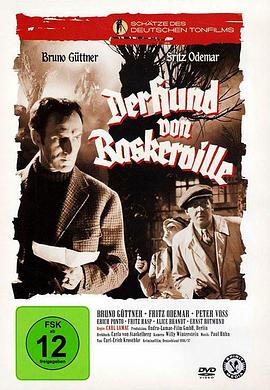
A most pleasingly atmospheric rendition of the tale, noirishly photographed and moodily set, this is the version which probably would have delighted Conan Doyle the most. There is one important plot change which enables the beautiful Alice Brandt to enjoy both a larger role and a more intriguing part in the proceedings. This change also builds up the parts of Dr Mortimer and Lord Charles, yet at the same time provides a nice introduction to the is-he-sinister or is-he-a-good-guy Barrymore, deftly played here by Fritz Rasp. Despite the sting of its well-developed story, the spellbindingly atmospheric direction and the engrossing performances delivered by the entire cast, many fans may find this version somewhat disappointing. For at least three reasons: As in the novel, the part played in the narrative by Sherlock Holmes, though vital, is minimal. And in this version, not only has no attempt been made to enlarge his role, if anything both writer and director do their best to minimize it. Holmes does not even make his entrance for half-an-hour, and when he does finally appear, he has his back to the camera. It is Fritz Odemar, as Dr Watson, who receives the more favorable camera angles. And there is a purpose in this. It is Watson, not Holmes, who figures as the main protagonist of The Hound of the Baskervilles. For the bulk of the narrative, Holmes disappears. It is Watson and Lord Henry (Peter Voss) who take up the running. The movie is almost over, before Holmes closes in on the villain. And even so, this is not the obsessed, self-important Holmes we are accustomed to see taking charge. Another problem is that the title hound itself does not figure a great deal in the action, a downgrading which will undoubtedly rate as another major disappointment for fans. And finally, it could be argued that the script gives too much attention to Conan Doyle's red herring, the escaped convict, and not enough to the real villain. This said, it must surely be admitted by all, that Odemar's interpretation of Watson—intelligent, charming, level-headed, courageous and resourceful—is much closer to Conan Doyle's conception than either the bungling, inveterately stupid Nigel Bruce or the self-effacing Ian Fleming. One other player deserves special mention: Erich Ponto (Dr Winkel in The Third Man) who seems exactly right for Stapleton. A difficult part, superbly played. - JohnHowardReid, imdb
《青春之歌》是一部关于青春成长的影片,三个年轻人因为对HIP-HOP的热爱而走到一起,但三年前发生在他们身上的一些事情,让事情起了变化...
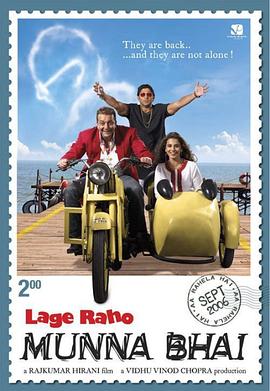
甘地热潮正席卷印度全国,其中一个原因可以说是拜本片所赐。本片讲述黑道人物姆纳为了追求一名电台女DJ,讹称自己是大学教授,不惜恶补甘地生平,以便参加电台问答比赛。当他日刨夜刨时,甘地的鬼魂就在他眼前出现,教导他如何以非暴力手段应付人生逆境。在这出黑道人物追女仔的电影中,圣雄甘地的角色几乎由头演到尾,甘地的哲学和精神也贯彻了全片。本片在首都新德里开画一星期后,市政府以该片宣扬甘地追求真理和非暴力抗争,宣布该片可以豁免缴交娱乐税。同样地,印度中部切蒂斯格尔邦也因本片表扬甘地的价值观,具有教育意义,宣扬正面讯息,也给予该片免税的地位。