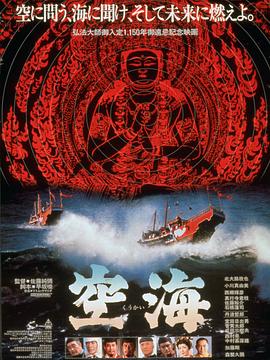
《空海》是导演佐藤纯弥于1984年拍摄完成的电影,描述了日本平安时期遣唐学者弘法大师的故事,这部影片是为了纪念这位在日本文化史上留下过重要足迹的高僧坐化一千一百五十周年而摄的。年轻时代的空海为了求取真经,学习艺术真谛,曾不避风险,远涉重洋,来到中国,学习密教和书法,回国后创立真言宗密教,并丰富了日本的艺术内容。影片斥资达12亿日元,并在中国政府的支持下来到中国取景,是当时少见的超大制作;《空海》上映后,日本全国票房收入超过30亿日元,位列1984年票房排行榜第七位,获得极大成功。
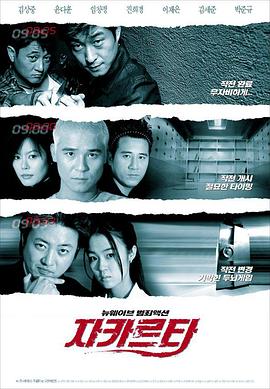
「O-kwang投资金融」是一间新成立但十分成功的投资公司,它的保险库亦收藏了巨款,于是引来了三帮人在某天早上九时前来偷钱。第一队是Sa-hyun和Eun-na。Sa-hyun虽然是O-kwang投资公司理事长的儿子,可是却欠下巨债,更得不到爸爸的信任,最后把心一横,游说在该间公司分行当小职员的Eun-ra一同行动。 第二队爆窃保险库的人就是Blue、White和Red。他们三人从不知道对方的真正姓名,只是为了这次行动而走在一起。他们更不惜花时间于晚上在投资公司附近挖掘隧道进入保险库。第三队偷钱的队伍由Hae-ryong和Doo-san组成。Hae-ryong由黑市途径购买了一枝枪,希望能够利用它在投资公司开门之际去偷钱……
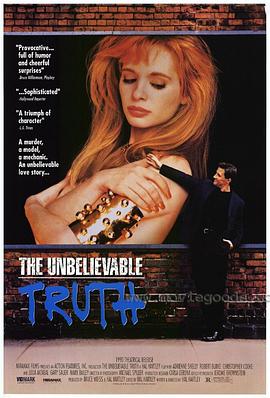
Fraught with over obvious symbolism, Hartley's early feature is nonetheless a joy to watch. Hal here shows us his uncanny ability to cast his characters perfectly came early in his career. Adrienne Shelley is a near perfect foil to herself, equal parts annoying teen burgeoning in her sexuality (though using sex for several years); obsessed with doom and inspired by idealism gone wrong she is deceptively – and simultaneously – complex and simple. Her Audrey inspires so many levels of symbolism it is almost embarrassingly rich (e.g., her modeling career beginning with photos of her foot – culminating her doing nude (but unseen) work; Manhattan move; Europe trip; her stealing, then sleeping with the mechanics wrench, etc.) As Josh, Robert Burke gives an absolutely masterful performance. A reformed prisoner/penitent he returns to his home town to face down past demons, accept his lot and begin a new life. Dressed in black, and repeatedly mistaken for a priest, he corrects everyone ("I'm a mechanic"), yet the symbolism is rich: he abstains from alcohol, he practices celibacy (is, in fact a virgin), and seemingly has taken on vows of poverty, and humility as well. The humility seems hardest to swallow seeming, at times, almost false, a pretense. Yet, as we learn more of Josh we see genuineness in his modesty, that his humility is indeed earnest and believable. What seems ironic is the character is fairly forthright in his simplicity, yet so richly drawn it becomes the viewer who wants to make him out as more than what he actually is. A fascinatingly written character, perfectly played. The scene between Josh and Jane (a wonderful, young Edie Falco . . . "You need a woman not a girl") is hilarious . . . real. But Hartley can't leave it as such and his trick, having the actors repeat the dialogue over-and-over becomes frustratingly "arty" and annoying . . . until again it becomes hilarious. What a terrific sense of bizarre reality this lends the film (like kids in a perpetual "am not"/"are too" argument). Hartley's weaves all of a small neighborhood's idiosyncrasies into a tapestry of seeming stereotypes but which delves far beneath the surface, the catalyst being that everyone believes they know what the "unbelievable truth" of the title is, yet no two people can agree (including our hero) on what exactly that truth is. A wonderful little movie with some big ideas.
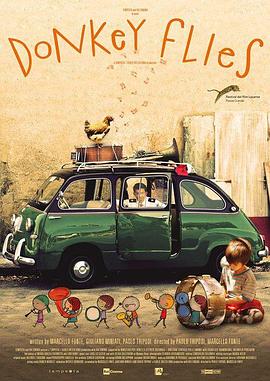
Maurizio is a stubborn boy who grows up near the fiumara, where people throw away whatever they no longer need. This open-air dump becomes his playground, where among wrecked cars and other treasures large and small, he begins to dream of playing in the town band. Mamma Rosa looks on his musical aspirations as a childish whim, a luxury that the family cannot afford. And so, between the good advice by Mosè the donkey and the pranks by chicken N’Giulina, Maurizio is faced with a growing series of adventures and comes to the realization that, if his dream is to come true, he must be determined to see it through right to the end.