俄罗斯之旅
7.0 |03月26日 |已完结
简介:

  第一集 破冰
  本片开头是乔纳森·丁布尔比在北极圈里的苔原上驾车的情景。此时正值俄罗斯短暂夏天中的极昼季节,冰雪融化,太阳不落。现在,在乔纳森·丁布尔比眼前有一段一万英里长的艰苦路途,他要穿越的这个国家不仅是世界上最大的,而且或许也是最令人敬畏的。
  第二集 两个世界
  如今,如果说俄罗斯的活力是在城市,那么这个国家永恒的精神是在乡村。在本集的开头,乔纳森·丁布尔比参加了一场麦当娜音乐会的招待会,莫斯科的任何人都可以出席,包括一位高级餐厅的老板Arkady Novikov。第二天乔纳森乘火车来到了一个截然不同的世界:列夫·托尔斯泰的故居。他可以说是俄国最伟大的一位作家。
  第三集 祖国
  伏尔加河是俄罗斯人爱国情怀的象征,它流经莫斯科,通过俄国的心脏,最后注入里海。几次巨大争斗和变革都发生在它的沿岸。离阿斯特拉罕港不远有一个规模很小的村庄,那儿曾经是金帐汗国的首都。乔纳森正值寒风刺骨的2月到达那里,惊讶地发现,成吉思汗的庞大帝国的西京已湮没无迹。
  第四集 国家宝藏
  西伯利亚是俄罗斯的宝藏。早在16世纪,第一批冒险横跨乌拉尔山脉的哥萨克人在此大做毛皮生意,但是不久后,别的暴利生意就兴起了。乔纳森从一个绿宝石矿开始他的这次旅途,然后来到叶卡捷琳堡——这个城市建起以保护和开发山里的铁矿储备。它的重工业为苏联政府制造了大批坦克和军备,还诞生了重金属音乐传统。
  第五集 远离莫斯科
  这天根据西伯利亚标准是一个温暖的日子,仅零下18度而已。当乔纳森在贝加尔湖岸附近遇见一个布里亚特僧人。Valentin Khagdaev把乔纳森带到原野上的一棵树前。这棵树是从石头里长出来的。

猜你喜欢
换一换
逝
756
5.0
DVD中字
5.0
更新时间:03月26日
主演:内详
简介:  1997年是一个特殊的年份。改革开放的总设计师小平同志去世。而上海,作为一个国际大都市,正经历着巨大的变迁。这变迁既有具象的,如城市旧区改造;也有抽象的、心理层面的变革——比如人们的性观念、中年男女对于婚姻和生命的反思等等。英国导演Phil Agland拍摄的《逝——上海冬夜的爱与死》准确地抓住这个城市跃动的脉搏,交替讲述了这座城市里几个人各自不同的故事。他选取的人物与故事不但皆与爱和死相关联,而且电影始终保持着恰到好处的节奏感——从故事的铺陈、演进到高潮即将到来前一刹那令人屏息的张力,无不显示了导演卓越的控制能力。在电影离结尾约三十分钟的时候,各条线索同时到达了引而不发的边缘——居住于贫困旧屋的孩子即将经历一场高风险的心脏手术;京剧小演员一个月之后马上要登台公演;弄堂里的寡妇要面临再婚的抉择;而杀害女友的团委干部即将接受最终的审判。这令全片自始至终保持着一种纪录片里不常有的剧烈的悬念感。
  团委干部杀害女友的故事在电影中占据了最大的比重。爱与死在这个故事中交织在一起。一个国家机关的知识分子,对自己的女朋友何以下此毒手?性质更为严重的是,他在杀人之后将女友的尸体分成好几部分,抛入江中。手段之残忍,令人难以想象。电影忠实地追随了此案从审讯、宣判、上诉到终审的全过程,杀人犯从最初的抵赖到最后泪流满面,受害者家属在旁听席间的表情,无一不显现了人性的幽微之处,令观众深受震动。而受害者家属对于“杀人犯也会死,他的家人也会难过”的说法之剧烈抨击,更将故事推出更深的、道德反思的层面。
  很难想象《逝》出自一个英国导演之手,因为全片的上海风味是此浓重,街坊邻里和杀人罪犯皆操一口鲜活的上海话,丝毫没有剧情片的矫饰,原生态的幽默比比皆是。因此,这不仅是一部可以令西方人更准确全面地了解上海的纪录片,而且更适合上海观众观看,因为在那些词不达意的英文字幕背后,有可以令人或会心一笑或捧腹大笑的对话,而笑过之后,是对身处其中的故乡更深一层的了解,更具省思意味的自知。
1030
2007
主演:内详
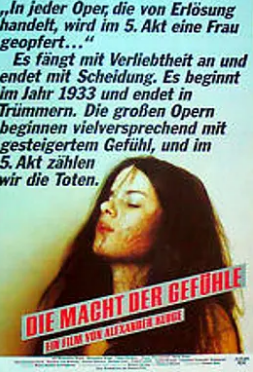
情感的力量
438
10.0
HD中字
情感的力量
10.0
更新时间:03月26日
主演:Hannelore Hoger,Alexandra Kluge,Edgar M. Böhlke
简介:  The Power of Emotion explains that emotion isn't to be confused with sentimentality. Emotion is ancient and more powerful than any art form. The film looks at young couples who run into difficulties as they try to translate their experiences of love into clear decision-making. A woman who has shot her husband provides a judge with a puzzle. Those who love can bring the dead back to life by means of co-operation. That's the focus of the opera, "The Power Plant of Emotions" and the "Opera of the 20th Century" cinema.
  Alexander Kluge: The Power of Feeling
  When I started working on The Power of Feeling, I was not in a rational state. I did not say, I have a subject and now I will make a film about it. Instead I was spellbound and observed in my direct surroundings, for example, how feelings move. I have not really dealt with the theme of my mother's death and the fact that she was the one who taught me "how feelings move." Nor have I dealt with how she died. That was an entire palette of feelings: "All feelings believe in a happy end," and everyone believes tacitly that they will live forever: The entire palette is somehow optimistic, a positive attitude towards life having been put on the agendaas long as she was young, as long as her body held out, from one day to the next she collapsed. She just suddenly collapsed, like in an opera where disaster takes the stage in the fifth act. It felt as if I had observed an air raid or a disaster.
  The film The Power of Feeling is not about feelings, but rather their organization: how they can be organized by chance, through outside factors, murder, destiny; how they are organized, how they encounter the fortune they are seeking.What is all this organization of feelings about? Generally feelings tend to be a dictatorship. It is a dictatorship of the moment. The strong feeling I am having right now suppresses the others. For thoughts this would not be the case. One thought attracts others like a magnet. People therefore need affirmation by other people to be sure about their own feelings (to counteract the acquisition of their feelings through outside forces). Through the interaction of many people, for example, in public, the various feelings also have a magnetic attraction to one another just like thoughts do. Feelings communicate through their manifestation in public.
  The cinema is the public seat of feelings in the 20th century. The organization is set up thusly: Even sad feelings have a happy outcome in the cinema. It is about finding comfort: In the 19th century the opera house was the home to feelings. An overwhelming majority of operas had a tragic end. You observed a victim.
  I am convinced that there is a more adventuresome combination: Feelings in both the opera and traditional cinema are powerless in the face of destiny's might. In the 20th century feelings barricaded themselves behind this comfort, in the 19th century they entrenched themselves in the validity of the lethal seriousness.
3920
1983
情感的力量
主演:Hannelore Hoger,Alexandra Kluge,Edgar M. Böhlke